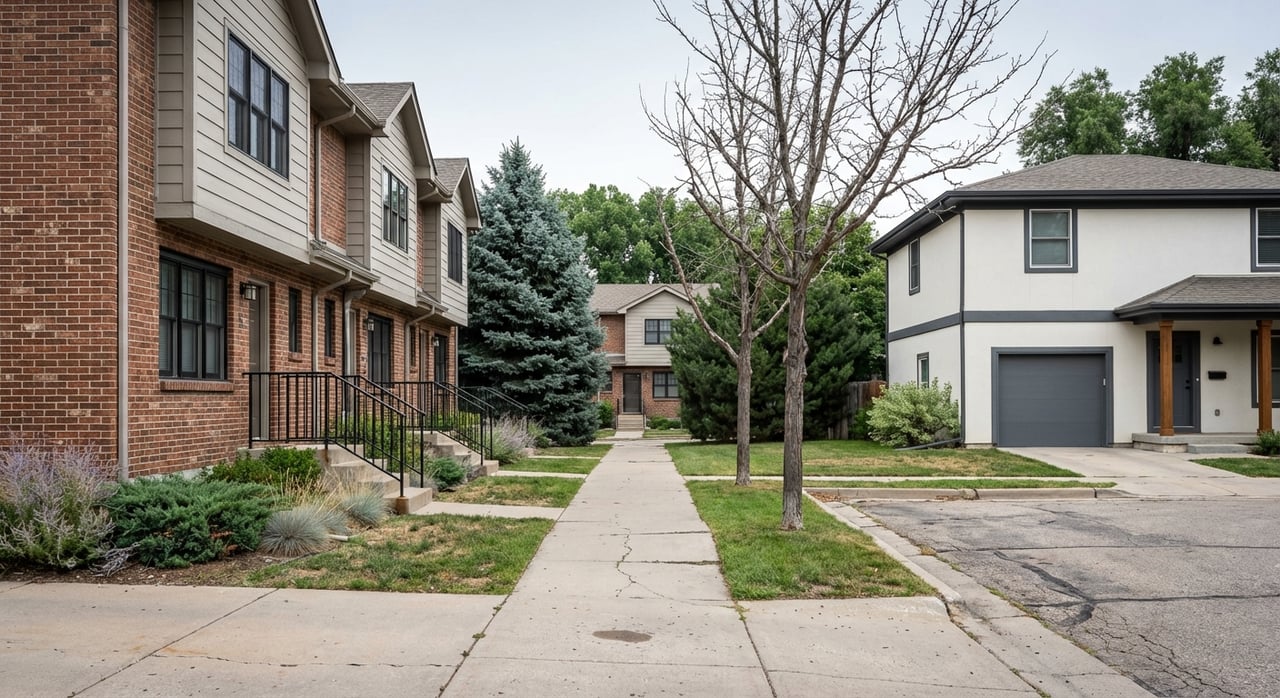
Torn between a townhome and a single-family home in Village East? You’re not alone. The neighborhood offers real options at different price points, and each path comes with trade-offs in space, maintenance, and monthly costs. In this guide, you’ll compare real numbers, see local examples, and get a clear checklist so you can choose with confidence. Let’s dive in.
Village East at a glance
Village East in Aurora is an established area, with most homes built in the 1960s and 1970s. You’ll find a mix of ranches, split-levels, two-story houses, and several small to medium townhome communities. Many detached lots are generous for an inner suburb, while attached units occupy smaller footprints with modest patios.
The neighborhood sits within the Cherry Creek School District and includes Village East Community Elementary and Ponderosa Elementary, with Overland High School nearby. Local parks such as Village East Park and nearby Utah Park provide outdoor space, and shopping corridors and I‑225 access make commutes to the Anschutz Medical Campus or Downtown Denver feasible.
Price snapshot: townhome vs single-family
Neighborhood trackers show a median home price around $534,900 for Village East (Oct 2025 reporting window). Ranges vary by source and date window, which is normal for micro-markets. Use recent MLS comps when you’re ready to write an offer.
Here’s how typical options line up:
- Townhomes: commonly listed in the low $200ks to mid $300ks. Hallcrafts and similar communities often show HOA dues in the $370 to $400 per month range, depending on what the association covers.
- Single-family: more often in the upper $300ks into the $600ks depending on size, updates, and lot.
Local examples to help you picture the spread:
- 12444 E Kansas Pl: a Hallcrafts townhome around $329k, about 1,296 square feet, with an HOA near $375 per month in recent listings that covered items like common insurance, trash, and water.
- 2210 S Joliet Way: a detached patio-home community example around $530k, roughly 3,228 square feet on a 4,356 square foot lot, with an HOA near $140 per month for exterior/grounds in that specific community. Not all detached homes are HOA-free, so read the details.
Budget fit and monthly predictability
Your budget and tolerance for recurring fees often drive the first decision.
- If your target purchase price is under ~$350k, townhomes in Village East are your most likely match. Run the math with the HOA added to your monthly budget. HOA dues have been trending upward in many markets, which can materially affect affordability. A recent national overview highlights why dues belong in every calculation.
- If you want a large private yard, multiple-car garage potential, or interiors over 3,000 square feet, you’ll likely focus on single-family homes. Expect a higher purchase price and more variable maintenance costs.
Lenders include HOA dues in your debt-to-income ratio. If you’re comparing two properties with similar purchase prices, the one with higher dues can reduce borrowing power. For a quick refresher on how condo and townhome loans work and how dues impact approval, see this condo financing primer.
Space, lot, and lifestyle
Space is where these property types really diverge.
- Townhomes: often ~800 to 1,400 square feet in the neighborhood, usually 1–3 bedrooms with a small private patio or modest yard. A two-story, 3-bed layout around 1,200–1,400 square feet is common.
- Single-family: frequently 1,800 to 3,200+ square feet with larger private yards for gardening, pets, or outdoor projects. That detached patio-home example at 2210 S Joliet Way shows how even smaller-lot detached options can deliver big interior square footage.
If you prefer a lock-and-leave lifestyle and less exterior upkeep, a townhome can be a great fit. If you want room for hobbies, play, or future renovations, a detached home offers more flexibility.
Maintenance, HOA, and what dues really cover
Townhomes and condos shift much of the exterior responsibility to the association. Dues often fund roof reserves, exterior painting, landscaping, snow removal, and common-area insurance. Some communities include trash and water in dues. In Village East, $370 to $400 per month is a common range in recent Hallcrafts listings, but always verify the current amount and scope.
Single-family homes may have lower or no HOA dues, but you own the full maintenance picture: roof replacement, exterior paint, driveway, fencing, and yard care. Some detached communities in Village East do include a small monthly HOA for limited services. That patio-home example with $140 per month shows how the gap can narrow, though you still control and fund major exterior repairs.
Tip: Ask for the HOA’s current budget, reserves, meeting minutes, and insurance certificate. Healthy reserves, clear maintenance plans, and transparent communication are good signs. Low reserves or pending litigation are red flags.
Financing details: FHA, VA, and warrantability
If you’re buying a condo or certain townhomes, the building or project may need to meet specific lending guidelines. FHA and VA loans often require the project to be on an approved list, although FHA offers a single-unit approval path in some cases. Check the status early using the official HUD condominium search and loop in your lender.
Conventional buyers should ask whether a project is considered “warrantable” under Fannie Mae and Freddie Mac guidelines. Non-warrantable projects can still be financed in some cases, but terms may be stricter. For an overview of what warrantability means and why it matters, review this guide to warrantable vs non-warrantable condos.
Insurance and taxes: plan for both
Insurance needs differ by property type. Condo and many townhome owners typically carry an HO‑6 policy that covers the interior (walls-in), personal property, liability, and sometimes loss-assessment. The HOA’s master policy covers common elements and, depending on policy type, some exterior components. Get familiar with HO‑6 basics with this plain-language overview, then confirm the HOA’s master policy and what you personally need to insure.
Property taxes in Arapahoe County are often lower than the U.S. median on an effective-rate basis. Summaries place the effective county rate in the ~0.5% to 0.7% range, though actual bills vary by address due to local mill levies. For planning, use county records for the exact parcel, and consult a county-level look at trends via this Arapahoe tax summary.
Resale and appreciation
In many suburban markets, detached homes can capture strong buyer demand for land and private yards, which may support appreciation over time. Townhomes can also appreciate well, especially when they offer an attainable price point near jobs, transit, and schools. Long-term performance depends on maintenance, HOA health, updates, and location within the neighborhood. For general context on how townhomes compare to detached homes, see this overview on townhome vs single-family costs and value.
When you’re serious about a property, rely on recent MLS solds within the last 6–12 months to gauge value. Micro-neighborhood data can vary by provider and window, so fresh comps matter most when pricing or offering.
Quick decision checklist
Use these questions to clarify your best fit in Village East:
- Budget and dues: What is your max monthly payment, including principal, interest, taxes, insurance, and HOA? If you target under ~$350k, a townhome is the most likely match.
- Space: Do you need 3+ bedrooms, a workshop, or over 2,000 square feet? Detached homes generally deliver more interior space and yard.
- Maintenance: Do you want exterior tasks handled by an HOA, or do you prefer full control of your property and projects?
- Lifestyle: Is a lock-and-leave setup ideal, or do you want a private yard for gardening, pets, or play?
- Financing: If you’re using FHA or VA, is the condo/townhome project approved or eligible for single-unit approval? Is it warrantable for conventional loans?
- Resale: Which option aligns with long-term plans for upgrades and potential value growth?
Due diligence steps for Village East buyers
A little homework goes a long way. Here’s a clear process:
Get pre-approved and confirm with your lender whether the condo or townhome project is FHA/VA approved or warrantable. Use the official HUD condo search for FHA status.
Request the full HOA packet: CC&Rs, bylaws, meeting minutes, two or more years of financials, reserve study, and insurance certificate. Review the budget and reserves closely. Ask about any planned special assessments.
Verify what dues include. In Village East townhome communities, dues have recently covered items like common insurance, trash, water, landscaping, and snow removal. Always confirm current coverage.
Pull comps and study 6–12 months of solds with your agent. Prioritize nearby like-kind properties and note differences in updates, lot size, and HOA fees.
Check the property tax record for the exact parcel. Mill levies differ by address, which affects your monthly payment.
Match your insurance to the property type. For condos and many townhomes, confirm master policy type and buy appropriate HO‑6 coverage, including loss-assessment if recommended by your insurance pro.
Order inspections with the property type in mind. For condos and townhomes, consider the building systems and ask questions about HOA maintenance history. For detached homes, pay attention to roof age, sewer scope, and exterior condition.
Which should you choose?
If you value lower entry price and predictable exterior maintenance, a Village East townhome can be a smart, attainable way to get into the neighborhood. If space, a private yard, and flexibility rank higher, a detached home will likely serve you better over the long run. The right answer depends on your budget, how you want to live day to day, and the specifics of each property’s HOA and condition.
Want a clear, side-by-side plan using current comps, HOA budgets, and your financing profile? Reach out to Gerlock Homes for a no-pressure consultation. Our family-led team will walk you through options, preview the best matches, and help you move forward with confidence.
FAQs
What are typical townhome prices and HOA dues in Village East?
- Recent townhome listings often run from the low $200ks to mid $300ks, with many Hallcrafts-style communities showing HOA dues in the $370 to $400 per month range depending on what is included.
Are detached homes in Village East always free of HOA dues?
- Not always; most single-family homes do not have significant dues, but some patio-home or planned communities charge modest monthly fees for limited exterior or grounds services, so check each listing’s details.
How do FHA and VA loans work for Village East condos and townhomes?
- FHA and VA often require project approval; you can search FHA status on the HUD condo list, and your lender can advise on single-unit approvals and VA eligibility.
What insurance do I need for a townhome or condo versus a detached home?
- Condo and many townhome buyers typically need an HO‑6 policy (walls-in), while detached homes usually use traditional homeowners coverage; confirm the HOA’s master policy, then tailor your own coverage accordingly, using this HO‑6 overview as a starting point.
How should I estimate property taxes in Aurora’s Village East?
- Use Arapahoe County parcel records for accuracy; county-level summaries suggest effective rates around ~0.5% to 0.7%, but local mill levies by address determine the actual bill, as outlined in this Arapahoe tax summary.
Do HOAs affect how much I can borrow?
- Yes; lenders include HOA dues in your debt-to-income ratio, which can reduce borrowing power compared to a similar-priced property with lower or no dues, so always factor the monthly HOA into your affordability plan.