Search "Cherry Creek Vista home prices" and you will get three different neighborhoods back, each with its own median, its own days-on-market number, and its own idea of what a house here should cost. The challenge is that a site's chart may reflect a boundary different from the block you're actually interested in.
If you're comparing Denver-area neighborhoods right now, that matters more than it sounds like it should. A median price is the single most-quoted number in any home search, and in this case it depends less on the market than on which map the website drew before it started counting.
Three neighborhoods, one name
Cherry Creek Vista turns out to be a name shared by at least three distinct pockets of the Denver metro, and portals rarely say which one they mean.
| What you might find | Where it actually is | Housing type | What the label implies |
|---|---|---|---|
| A townhome search result | Southwest Arapahoe / Englewood, near Arapahoe Lake | Attached townhomes | Smaller, denser, closer to Englewood's business corridor |
| A "Cherry Creek Vista, Cherry Creek, CO" market page | A polygon several portals draw around the broader Cherry Creek label | Mixed single-family and attached | Pulled toward Cherry Creek's premium pricing by association |
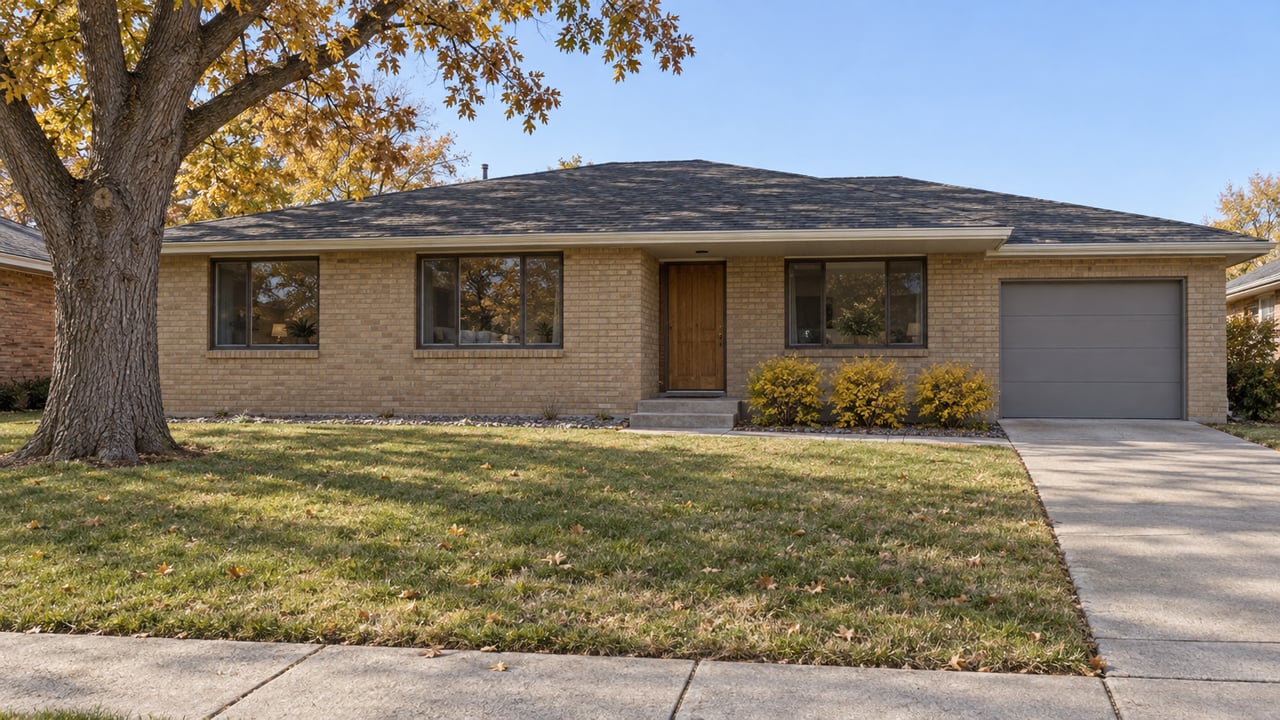
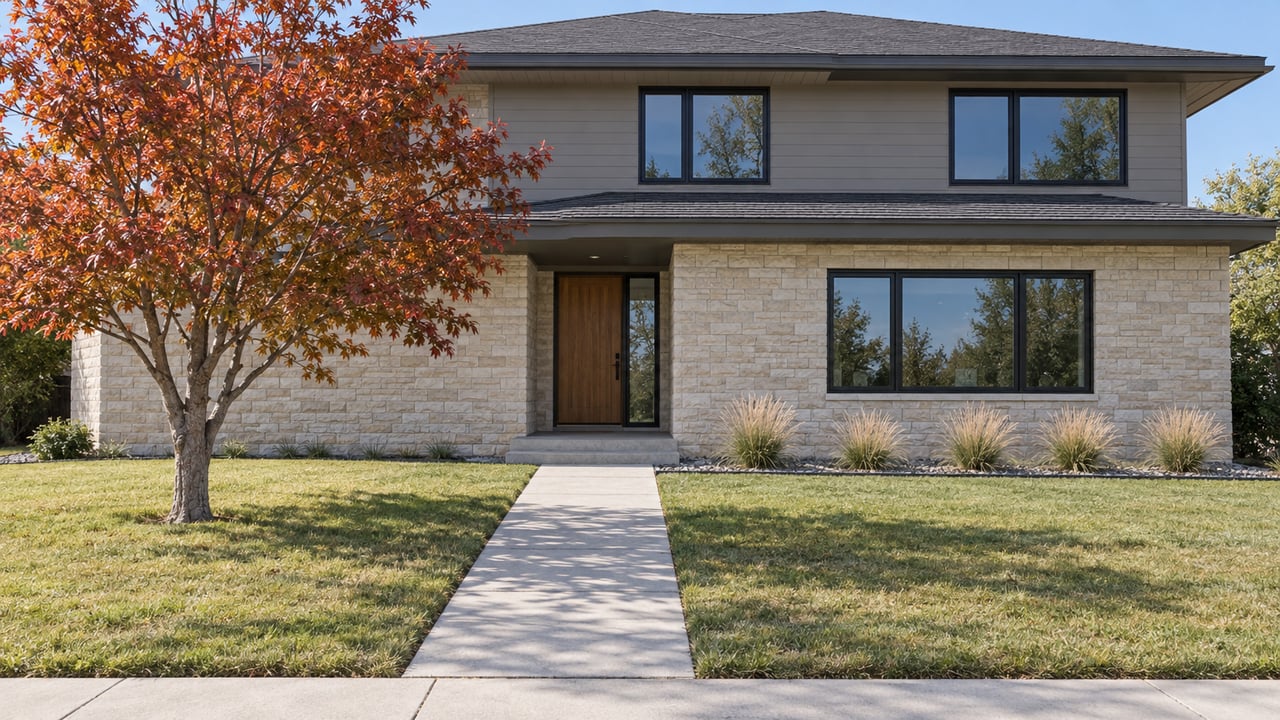
| The neighborhood residents actually mean | Unincorporated Arapahoe County, along the west side of Cherry Creek State Park | Single-family homes on quarter-acre-plus lots | An established, built-out 1970s-90s community |
The third one is the neighborhood Gerlock Homes represents, bounded roughly by Havana on the west, Orchard on the north, the Lincoln Executive properties on the south, and Macon and Moline on the east. It's a single-family enclave that was substantially built out by the early 1990s, governed by the Cherry Creek Vista South Homeowners Association, which was incorporated in November 1977 and amended its covenants in May 1992 to bring all of its filings under one set of rules.
If you're comparing this neighborhood to others on your list, the first useful thing to know isn't the median price. It's confirming which polygon produced it.
What happens when a portal page averages eighteen sales
One portal page grouped under the broader Cherry Creek label illustrates how the boundary affects reported figures. In the single month before its three-month reporting window, the page reported its average sale price down 19.1% year over year. For the three months ending April 2026, the same page reported prices down 0.94% compared with the same period a year earlier, with a median of $877,000. April itself saw eighteen homes sold, up from sixteen the year before.
Those figures came from the same portal page, but its broader Cherry Creek label is distinct from the Cherry Creek Vista South boundaries described above, so they should not be read as measurements of that HOA neighborhood. A small sales sample on that page can make its average swing sharply after an unusually high- or low-priced sale, without establishing a broader change in the HOA neighborhood's values. Separate listing data for the broader Arapahoe County tag shows median days on market running 19 days for homes overall as of late May 2026, but 25 days for homes priced under $750,000, a gap that has more to do with which nineteen or twenty-one houses happened to be listed that particular week than any structural change in demand.
Small samples can make reported figures volatile. A portal page based on sixteen to eighteen monthly sales can look more volatile than the underlying market, simply because of the math.
HOA dues and other ownership costs
The HOA line item tells its own version of this story. Cherry Creek Vista South's own website lists current dues at $50 per property per year, funding communication, entrance landscaping, and covenant enforcement through a volunteer board. Older association materials for the same HOA list dues at $25 annually. The current and older materials list different amounts, so the date of the information matters when estimating this cost.
The parks and community pool in Cherry Creek Vista are handled separately from the HOA and maintained by the Cherry Creek Vista Parks and Recreation District, a separate taxing entity. That means a buyer pricing out true carrying costs here needs to look past the HOA fee entirely and check the recreation district assessment on top of it, because the two are billed separately and neither one describes the other.
Another ownership cost to consider when buying in this neighborhood is homeowners insurance. Colorado's average homeowners insurance premium has climbed to roughly $4,100 a year, a 137% increase over the past decade, driven by the state's exposure to hail and wildfire. The $50 annual HOA due is one part of ownership costs; homeowners insurance is another.
Reading the metro numbers correctly
None of this happens in a vacuum. Denver's broader housing market spent most of 2026 rebalancing after several years of sharp swings. Mortgage rates have settled into the mid-6% range, a level industry economists at the Denver Metro Association of Realtors' 2026 Economic Summit described as enough to keep buyers on the sidelines waiting for better terms, even as pent-up demand builds behind them. Metro-wide inventory has been climbing, and homes across the Denver-Aurora-Lakewood area are taking longer to sell than they did during the pandemic-era peak, with days-on-market stretching into the 18-to-34-day range depending on the segment.
A neighborhood like Cherry Creek Vista South behaves differently inside that backdrop than a newer subdivision would. Because the community was substantially built out by the early 1990s, there's no active builder pipeline feeding new inventory in. Supply here depends entirely on how many current owners decide to list in a given month, not on how many permits a developer pulled. That established character means the number of homes available at any given time depends on owner decisions, a structural feature of the neighborhood, not a symptom of a cooling market.
A median price is only as reliable as the map that drew it, and in a market this thin, the map matters more than the math.
What this means if you're comparing neighborhoods right now
If Cherry Creek Vista is on your shortlist, the practical move is to stop trusting the headline number until you know its source. Ask whether the price you're looking at came from a polygon that includes the Englewood townhomes, a Redfin-drawn boundary tucked under the broader Cherry Creek label, or the actual single-family HOA along the state park. Ask whether the sample behind that number was large enough to be useful, especially when the portal page reports only a small number of closings. And when you're pricing out what ownership actually costs, look beyond the annual HOA due to include the recreation district assessment and insurance premium, which also affect ownership costs.
That kind of digging is exactly where a local team earns its keep. Gerlock Homes has spent years working within these specific boundaries, which may differ from the boundaries national portals draw around a similar-sounding name. Understanding that distinction can help you make a more informed comparison.
Frequently asked questions
Why do different websites show different prices for Cherry Creek Vista? Several unrelated Denver-area communities share the name, including a townhome enclave near Arapahoe Lake in Southwest Arapahoe and a broader polygon some portals group under the Cherry Creek label. Each produces its own median, and most sites don't specify which neighborhood their number describes.
Are the HOA dues in Cherry Creek Vista South really only $50 a year? The association's current materials list $50 per property annually, though older documents from the same HOA show $25. Either way, that fee covers communication, landscaping, and covenant enforcement only. Parks and pool access run through a separate recreation district with its own assessment.
Is the 2026 Denver slowdown affecting this neighborhood the same way it's affecting the rest of the metro? Not exactly. Because the neighborhood was fully built out decades ago, its inventory depends on how many longtime owners choose to sell rather than on new construction, which makes its monthly numbers move differently than a metro made up of newer, still-building subdivisions.
Thinking about where Cherry Creek Vista actually fits against the other neighborhoods on your list? Gerlock Homes can walk you through what the real boundaries, the real HOA, and the real numbers look like, no portal guesswork required. Request a free home valuation or schedule a no-pressure consultation to get started.
This article is general information, not legal, tax or financial advice. Consult a qualified professional about your situation.